
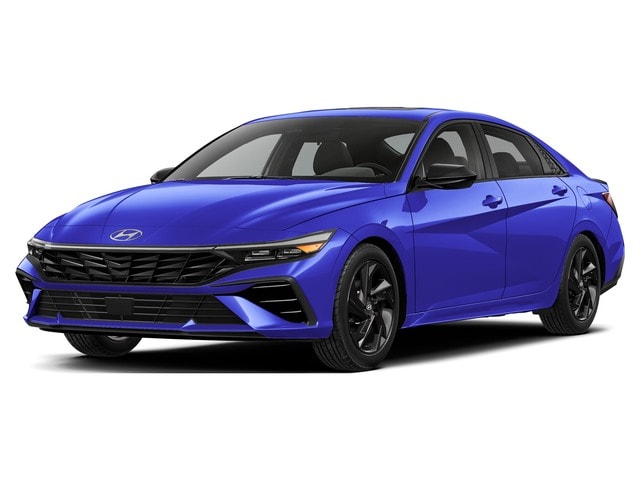
The 2026 Hyundai lineup gives drivers several distinct ways to approach everyday transportation. Some models prioritize fuel economy and an accessible price, while others focus on passenger space, all-weather traction, open-bed utility, performance, or electric driving.
For drivers in Plattsburgh and across the North Country, those differences matter. A vehicle used mainly for commuting may not need three rows, while a family that regularly travels on the Northway or carries outdoor equipment toward Lake Champlain and the Adirondacks may need more space, available all-wheel drive, or a different type of cargo area.
Hyundai’s 2026 range includes compact and midsize sedans, small crossovers, family SUVs, hybrids, plug-in hybrids, electric vehicles, performance models, and the Santa Cruz Sport Adventure Vehicle. The models represented in Garvey Hyundai North’s Hyundai digital showroom cover a broad range of driving needs without forcing every buyer into the same vehicle type or powertrain.
2026 Hyundai Lineup at a Glance
| Model | Vehicle Type | Powertrain Choices | Best Fit |
|---|---|---|---|
| Elantra | Compact sedan | Gas, hybrid, performance | Commuting and value |
| Sonata | Midsize sedan | Gas, hybrid, N Line | Comfort and highway travel |
| Venue | Subcompact SUV | Gas | Affordable everyday driving |
| Kona | Small SUV | Gas, available AWD | Compact versatility |
| Tucson | Compact SUV | Gas, hybrid, plug-in hybrid | All-around family use |
| Santa Fe | Three-row SUV | Gas, hybrid | Flexible family transportation |
| Palisade | Three-row SUV | Gas, hybrid | Maximum passenger comfort |
| Santa Cruz | Sport Adventure Vehicle | Gas, available AWD | Open-bed utility |
| IONIQ 5 | Electric crossover | Electric, RWD or AWD | Practical electric driving |
| IONIQ 9 | Three-row electric SUV | Electric, RWD or AWD | Electric family travel |
| Elantra N | Performance sedan | Turbocharged gas | Enthusiast driving |
Hyundai Sedans for Commuting, Comfort, and Performance
Hyundai continues to offer sedans for drivers who value efficiency, responsive handling, and a lower seating position. The Elantra and Sonata cover different size classes, while their hybrid and performance versions allow buyers to move toward lower fuel use or stronger acceleration.
2026 Hyundai Elantra

The Elantra is Hyundai’s compact sedan and one of the most practical starting points for daily commuting. Its size makes it easy to place in traffic and parking areas, while the cabin provides useful passenger space for everyday travel.
The standard Elantra is aimed at drivers who want value and fuel economy without giving up current infotainment and driver-assistance technology. The Elantra Hybrid places greater emphasis on efficiency, making it especially relevant for drivers who cover a large number of miles each week.
Hyundai also gives the Elantra family a performance side. The N Line adds stronger acceleration and sportier styling while remaining suitable for normal commuting. The Elantra N goes considerably further, with 276 horsepower, performance-focused suspension tuning, and a more engaging driving character.
That range allows the Elantra to serve several different buyers. It can function as an efficient first new car, a high-mileage commuter, or a serious performance sedan without changing the basic compact footprint.
2026 Hyundai Sonata

The Sonata provides more passenger room and a more relaxed highway experience than the Elantra. It is designed for drivers who prefer the efficiency and road manners of a sedan but want additional comfort for longer trips.
The standard Sonata covers everyday commuting and family needs, while the Sonata Hybrid focuses on lower fuel consumption. For drivers who regularly travel between North Country communities, the hybrid offers an efficient alternative without requiring charging.
The Sonata N Line moves in the opposite direction. Its 290-horsepower turbocharged engine gives the midsize sedan substantially stronger performance while preserving the space and comfort expected from a Sonata.
Available all-wheel drive on an appropriate gas configuration also gives some Sonata buyers additional traction for changing road conditions. That makes the Sonata more versatile than a typical front-wheel-drive midsize sedan.
Small Hyundai SUVs for Everyday Flexibility
Hyundai’s smaller crossovers provide a higher seating position, easier cargo access, and a more upright cabin without the dimensions of a larger family SUV.
2026 Hyundai Venue
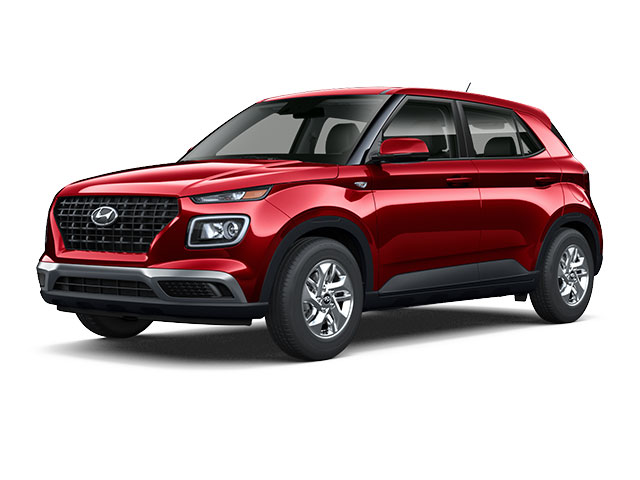
As Hyundai’s most compact crossover, the Venue is well suited to tight parking spaces, busy streets, and routine trips around town.
It is best suited to buyers who want an SUV-style seating position and hatchback practicality at an accessible price. The Venue uses front-wheel drive, so shoppers who consider all-wheel drive essential should look toward the Kona or Tucson.
For solo commuters, couples, and households that rarely need a large cargo area, the Venue provides the basic advantages of a crossover without adding unnecessary size, power, or cost.
2026 Hyundai Kona

The Kona adds more capability and choice while remaining compact. Available HTRAC all-wheel drive makes it particularly relevant to North Country drivers who want a smaller SUV but do not want to be limited to front-wheel drive.
The standard engine is suited to routine commuting, while an available turbocharged engine provides stronger acceleration. The cabin includes a modern display layout, useful connectivity features, and a flexible rear cargo area.
Compared with the Venue, the Kona provides more powertrain choice and available AWD. Compared with the Tucson, it is easier to manage in tight spaces and generally requires less room in a garage or parking area.
That makes the Kona a useful middle ground for buyers who want genuine SUV versatility without moving into the compact-family-SUV class.
2026 Hyundai Tucson: The Broadest Powertrain Choice

The 2026 Hyundai Tucson is Hyundai’s core compact SUV and one of the most adaptable models in the lineup. It is available with gas, hybrid, and plug-in hybrid power, giving buyers three different ownership experiences within the same general vehicle size.
The gas-powered Tucson is the straightforward option for shoppers who want familiar operation, practical passenger space, and a flexible cargo area. The Tucson Hybrid adds electric assistance for stronger low-speed response and improved efficiency.
The Tucson Plug-In Hybrid can complete shorter trips using electric power when it is charged regularly. It still retains a gas engine for longer travel, making it a practical middle step for drivers who want some EV-style operation without relying entirely on charging.
Available HTRAC all-wheel drive adds traction for changing weather, while the cabin offers enough space for small families that do not need a third row. The XRT brings a more rugged appearance for buyers who want a stronger outdoor-oriented design.
The Tucson fits the widest range of compact-SUV shoppers because buyers can choose the powertrain that matches their routine instead of choosing an entirely different vehicle.
Three-Row Hyundai SUVs for Family Travel
Hyundai offers two gas and hybrid SUV families with three rows. The Santa Fe focuses on flexible space in a more manageable package, while the Palisade is designed for households that regularly need greater passenger room.
2026 Hyundai Santa Fe

The 2026 Hyundai Santa Fe provides three-row flexibility without immediately moving into the size of a larger family SUV. Depending on configuration, it accommodates six or seven passengers and offers a wide cargo opening with rear seats that fold when carrying space becomes the priority.
Gas-powered versions use a turbocharged engine, while the Santa Fe Hybrid gives families a more efficient option. Available HTRAC all-wheel drive adds traction for winter roads and changing conditions.
The XRT is the more adventure-oriented Santa Fe. It adds increased ground clearance, all-terrain tires, and greater towing capability than other configurations.
The Santa Fe is best suited to households that need a third row for children, guests, or occasional family travel but do not want the dimensions and price of the largest SUV in the showroom.
2026 Hyundai Palisade
The redesigned Palisade is Hyundai’s larger and more premium three-row SUV. It is intended for families that regularly carry more passengers, use the third row frequently, or want additional comfort during longer trips.
Seating for up to eight gives the Palisade more passenger flexibility than the Santa Fe. Its larger cabin also provides a more suitable environment for adults who spend significant time in the second and third rows.
One of the most important additions for 2026 is the first Palisade Hybrid. It combines the space of Hyundai’s flagship family SUV with an electrified powertrain, while the gas model remains available for buyers who prefer a conventional setup.
Limited and Calligraphy versions place greater emphasis on premium materials and passenger comfort. The XRT PRO moves in a more capability-focused direction, with equipment intended for drivers whose family travel extends beyond normal paved-road use.
The Palisade is the stronger option when third-row usability and maximum family space matter more than keeping the vehicle compact.
2026 Hyundai Santa Cruz: A Different Kind of Utility

The Santa Cruz does not fit neatly into the usual sedan, SUV, or pickup categories. Hyundai describes it as a Sport Adventure Vehicle because it combines a crossover-style cabin with an open cargo bed.
Inside, it provides seating for five and the comfort expected from a modern crossover. Behind the cabin, the bed creates a separate place for bicycles, tools, camping equipment, wet gear, and other items that may not belong inside an SUV.
Standard versions use a 191-horsepower engine, while XRT and Limited models offer stronger turbocharged performance. HTRAC all-wheel drive is also available.
The Santa Cruz is not intended to replace a full-size pickup built for the heaviest towing and hauling jobs. Its advantage is that it remains comfortable and manageable during daily driving while providing an open cargo area when needed.
For drivers balancing commuting with fishing, cycling, camping, home projects, or other outdoor activities, the Santa Cruz fills a role that no other model in the Hyundai lineup does.
Electric Hyundai Models for 2026
Hyundai’s electric range includes a practical crossover and a larger three-row family SUV. These models remove gasoline from the daily routine while preserving the passenger space, technology, and available all-wheel drive many buyers expect.
2026 Hyundai IONIQ 5

The IONIQ 5 is an electric crossover with a spacious interior, distinctive design, and fast-charging capability. Buyers can choose rear-wheel drive for greater efficiency or all-wheel drive for stronger acceleration and added grip.
Its flat interior floor helps create an open cabin, while the hatchback layout provides practical everyday cargo space. Rapid DC charging is one of its strongest advantages for drivers who expect to use public fast chargers during longer trips.
The IONIQ 5 fits drivers who want an EV for commuting, errands, and family use without moving into a large three-row vehicle.
Cold temperatures, highway speed, cabin heating, and road conditions can affect real-world electric range. For North Country buyers, typical winter mileage and charging access should be considered alongside the advertised maximum range.
2026 Hyundai IONIQ 9

The 2026 Hyundai IONIQ 9 expands Hyundai’s electric range into the three-row SUV category.Depending on the seating layout, the IONIQ 9 carries six or seven people, while its longest-range configuration reaches an EPA-estimated 335 miles.
The larger cabin gives families an electric alternative without giving up third-row seating. Rear-wheel-drive and all-wheel-drive configurations allow shoppers to balance range, performance, and traction.
Fast-charging capability supports longer-distance travel, while the quiet drivetrain and spacious interior are well suited to family trips.
The IONIQ 9 and Palisade Hybrid may appeal to some of the same households, but they provide different ownership experiences. The Palisade Hybrid retains the convenience of gasoline for longer and less predictable routes. The IONIQ 9 is intended for families ready to make home and public charging part of their normal routine.
Which 2026 Hyundai Is Right for You?
The strongest choice depends on how much space, traction, efficiency, and utility will actually be used.
| Main Priority | Hyundai Model to Consider |
|---|---|
| Affordable compact SUV | Venue |
| Small SUV with available AWD | Kona |
| Gas, hybrid, or plug-in hybrid flexibility | Tucson |
| Efficient compact sedan | Elantra or Elantra Hybrid |
| More spacious sedan comfort | Sonata or Sonata Hybrid |
| High-performance sedan driving | Elantra N |
| Three rows without excessive size | Santa Fe |
| Maximum family passenger space | Palisade |
| Open-bed cargo versatility | Santa Cruz |
| Practical electric crossover | IONIQ 5 |
| Three-row electric family travel | IONIQ 9 |
A driver who spends most trips alone may gain little from choosing the largest three-row model. In the same way, a household that regularly carries six or seven people may quickly outgrow a smaller crossover, even if its lower price is initially appealing.
Powertrain choice should also reflect normal use. A gas model remains convenient for unpredictable routes and limited charging access. A hybrid can reduce fuel use without changing the refueling routine. A plug-in hybrid delivers the greatest benefit when it can be charged consistently, while an EV makes the most sense when home or dependable public charging fits the driver’s schedule.
Finding the Right Fit in the 2026 Hyundai Lineup
The value of the 2026 Hyundai lineup is not simply the number of vehicles available. It is the way each model addresses a different type of driving.
Elantra and Sonata cover efficient daily travel without requiring an SUV. Venue, Kona, and Tucson provide three different levels of crossover space and capability. Santa Fe and Palisade give families two distinct approaches to three-row transportation. Santa Cruz adds open-bed utility, while IONIQ 5 and IONIQ 9 offer electric options for different household sizes.
That variety is especially useful in the North Country, where the same vehicle may need to manage weekday commuting, winter roads, longer Northway travel, passengers, and outdoor equipment.
Rather than paying for size, power, or capability that may rarely be used, buyers can focus on the Hyundai model and powertrain that match their actual routine. That ability to choose between clearly different solutions is what makes the complete 2026 Hyundai lineup work for such a broad range of drivers.
Compare the models, powertrains, and available features in Garvey Hyundai North’s new Hyundai inventory to find the 2026 Hyundai that best fits your daily driving.


